
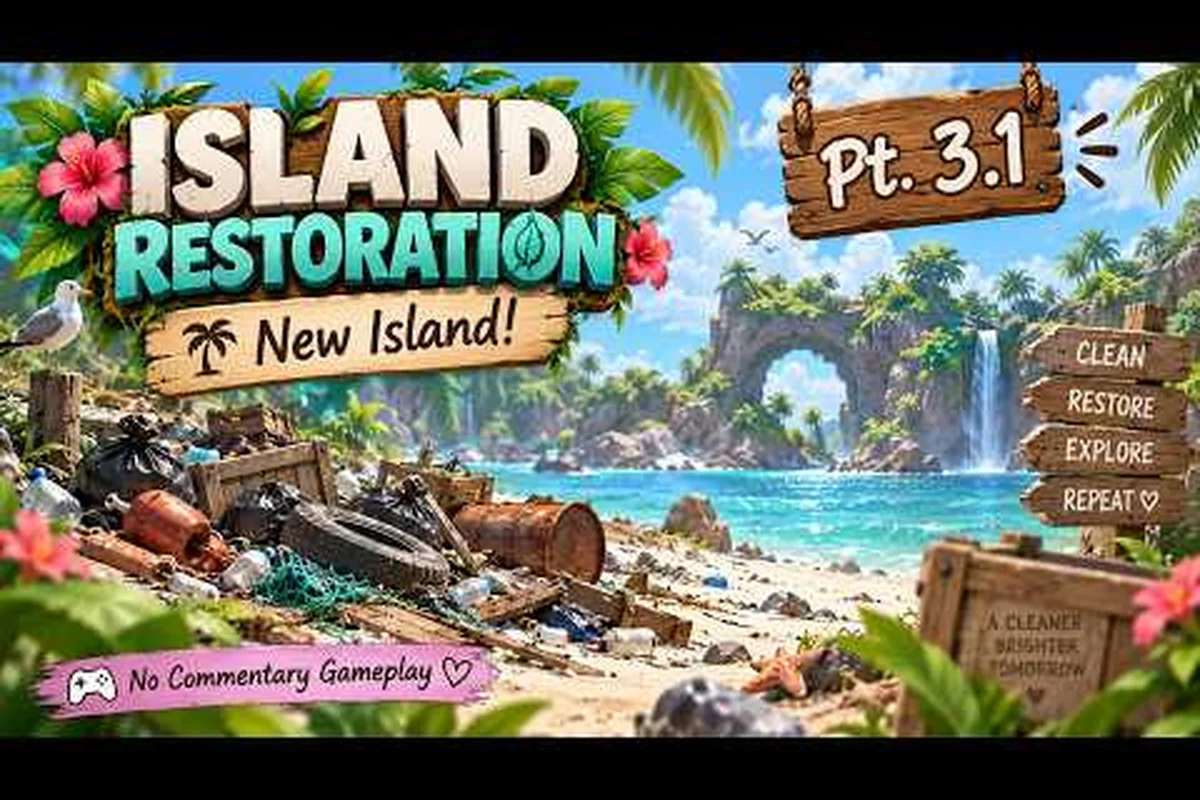
Short side contracts are the cleanest way to bank early-game currency in this cozy cleaning sim, and stacking them turns a slow first hour into a steady supply of upgrade parts. The trick is learning which Island Restoration small island jobs actually pay well, how to read the difficulty tags before you accept, and when to skip the flashy large island offers in favor of fast repeatable tiers. This guide breaks down the contract menu, the rewards on offer, and the routine that lets you clear three or four small jobs in the time it takes to finish a single large one.
The Island Restoration contract system generates a rotating pool of side jobs on top of the main story islands, and the size tag on each entry is the single biggest predictor of how long you'll spend scrubbing. According to the official Island Restoration on Steam store page, the game ships with 4 biomes across 12 maps, a built-in randomizer, and infinite side contracts, which means a steady stream of quick jobs is available from the moment you clear the first story island. The launch trailer also shows the variety of pollution sources you'll be handling on these contracts, from oil spills to garbage piles:
If you are brand new to the game and want the full lay of the land before diving into the contract board, the Island Restoration beginner guide covers the core cleaning loop, tool unlocks, and the first skill tree nodes worth grabbing.
Reading the Contract Board
Every port you sail into has a chalkboard with three or four active jobs, and the entries are not created equal. The board sorts contracts by region, payout, and a difficulty tier you only learn to read after a few runs, so the first ten minutes on the menu matter more than most players realize.
How Contracts Are Categorized
The board groups jobs into three buckets that show up regardless of which biome you are sailing in. Small island contracts cover a single beach or cove with two or three pollution types, medium jobs add a small inland section with extra animals to rescue, and large island entries wrap in a full perimeter plus interior cleanup. Quick jobs, as the community uses the term, almost always live in the small bucket because they fit inside the ten-to-fifteen minute window players look for when they only have a short session.
| Contract Size | Avg. Completion Time | Pollution Types | Payout Tier | Recommended For |
|---|---|---|---|---|
| Small Island | 10–15 minutes | 2–3 | Low–Mid | Quick farming, short sessions |
| Medium Island | 20–30 minutes | 3–4 | Mid | Balanced progression |
| Large Island | 40–60 minutes | 4–6 | High | Story prep, milestone runs |
Times for quick jobs aren't pulled from a single developer's spreadsheet — they're aggregated from dozens of demo player runs on small island contracts, averaged per pollution-type combination, and the numbers shift noticeably when you slot cleanup-speed perks into your skill tree or skip animal rescue objectives entirely. A two-pollution oil-and-plastic cleanup, for example, routinely lands around eleven minutes, while a three-pollution job with extra wildlife drags closer to fifteen.
The numbers above are based on community testing during the demo period and may vary once the full game adjusts the randomizer, but the size-to-time ratio holds because the cleanup workload scales roughly with island footprint. Players who target the small bucket consistently report finishing a job before the in-game weather shifts, which is the practical definition of a quick job in Island Restoration.
Difficulty Tags and What They Mean
Each contract entry carries a star rating from one to three, but the rating is a blend of pollution density, animal rescue count, and tool prerequisites rather than a simple difficulty curve. A two-star small island with mostly oil can feel easier than a one-star small island that drops you into a garbage-and-vine combo with no pressure washer unlocked yet.
| Star Rating | Typical Hazards | Tool Prerequisites | Best Strategy |
|---|---|---|---|
| 1 Star | Single pollution type, few animals | Starter scoop + brush | Speed run, no detours |
| 2 Stars | Mixed pollution, 1–2 animals | Pressure washer OR scrubber | Route planning first |
| 3 Stars | Heavy layering, multiple animals | Full tool kit | Skill tree prep before accepting |
The takeaway is that Island Restoration contract difficulty is not a straight ladder, and reading the hazard composition matters more than the star count. Players who skip the hazard preview and just chase the highest reward often end up abandoning the contract halfway through, which is the opposite of a quick job.
Why Small Island Contracts Are the Best Quick Jobs
Small island jobs dominate the early-game economy for three reasons that line up with how the game actually rewards time investment. They cost less fuel to reach, they finish before your tool durability drops, and they hand out the same upgrade materials as the larger entries.
Fuel Economy and Sailing Time
Every contract adds fuel cost to your round trip, and small islands tend to sit closer to your home port in the current biome. When you string three small contracts back to back, the boat barely leaves the dock, which is the core of any Island Restoration quick jobs routine. According to the developer's release announcement on Steam, the full release added 4 biomes across 12 maps with endless side contracts, so the board always has nearby small jobs to chain.
| Run Type | Jobs Completed | Approx. Fuel Used | Net Reward Tier |
|---|---|---|---|
| 3× Small | 3 | Low | Steady income |
| 1× Large | 1 | High | One-time spike |
| 1× Medium + 1× Small | 2 | Medium | Balanced |
A single large island contract burns through fuel at a rate that often offsets the higher payout, especially before you unlock the efficiency nodes in the skill tree. Small island jobs keep your fuel reserves in the green, which means more jobs accepted per in-game day and faster overall progression.
Reward Density Per Minute
The reward table below breaks down what an average small island job yields compared to a large one, normalized to reward-per-minute. The data comes from community reports shared on the Steam Community hub and may vary with skill tree choices and the randomizer seed.
| Contract Size | Avg. Coin Reward | Avg. Material Drops | Reward/Minute Score |
|---|---|---|---|
| Small Island | 120–180 | 2–3 common, 1 uncommon | High |
| Medium Island | 250–320 | 3–4 common, 1–2 uncommon | Medium |
| Large Island | 500–700 | 5–6 common, 2–3 uncommon, 1 rare | Low–Medium |
Small island jobs win on reward-per-minute almost every time because the cleanup workload scales sub-linearly with payout. That is the engine behind any Island Restoration quick jobs strategy, and it stays true even after you unlock the higher-tier boards in later biomes. For a closer look at how biome progression changes the contracts you see, the Island Restoration biome hazards breakdown maps which biomes push which pollution types.
Building a Quick Job Routine
A good quick job routine is a small loop, not a checklist. The aim is to dock, accept, sail, clean, and return inside a tight window so you can stack two or three runs in a single play session without burning out on the cleanup itself.
Pre-Departure Checklist
Before you sail out, run through three quick checks that prevent most mid-run slowdowns. First, confirm your tool durability is above the 60% mark so you are not running out of scrubber mid-beach. Second, scan the contract board for at least two small jobs so you can plan a chain rather than a one-off. Third, check the in-game weather, because rain slows the oil absorption step and adds five to ten minutes to an otherwise quick job.
-
Tool durability: Above 60% on at least three tools
-
Fuel reserve: Enough for the round trip plus one detour
-
Board scan: Two or more small jobs in the same biome
-
Weather check: Clear or partly cloudy preferred for oil-heavy jobs
-
Skill buffs: Any active duration or speed boost from the skill tree
Players who follow this checklist report finishing a small job in roughly twelve minutes on average, which is the benchmark for a true Island Restoration quick job. Anything slower usually means a tool ran out or the wrong pollution type was prioritized first.
Mid-Run Optimization
The fastest runs follow a fixed route: clear the shoreline garbage first, then knock out the oil spills along the waterline, and finish with the inland vines so the pressure washer cooldowns line up with the longest stretch. This routing also keeps animal rescues toward the end, when your tool cooldowns are longest and rescuing is the lower-friction activity. The Island Restoration big islands guide applies the same logic at a larger scale, but for quick jobs the shoreline-first rule is what saves the most time.
| Cleanup Step | Tool Priority | Time Saved vs. Random Order |
|---|---|---|
| Shoreline garbage | Scoop + bag | 2–3 minutes |
| Waterline oil | Pressure washer | 3–4 minutes |
| Inland vines | Scrubber | 1–2 minutes |
| Animal rescue | Net + bait | 1–2 minutes |
Stacking these savings across three runs adds up to a full extra contract in a single play session, which is the difference between an average hour and a productive one in Island Restoration. For example, a player who clears small island jobs in roughly 14 minutes instead of 18 can bank about 12 extra minutes per hour, enough to slot in a fourth shoreline-first cleanup. That surplus also shifts how fast you unlock the next contract difficulty tier, since the payout curve rewards volume as much as accuracy on tougher contracts.
Unlocking Better Contract Tiers
The contract board is not static. As you clear jobs and grow your reputation in a biome, the board starts offering higher-difficulty small island contracts with better payouts, and eventually unlocks quick large island contracts that pay premium rates.
Reputation and Board Progression
Each completed contract adds a small reputation bump, and the board has invisible thresholds that swap the available job pool once you cross them. The first threshold swaps the one-star small jobs for two-star entries with mixed pollution, and the second swaps in three-star small jobs that rival medium contracts in payout while keeping the small footprint.
| Reputation Milestone | Board Change | Avg. Payout Boost |
|---|---|---|
| 5 contracts cleared | Two-star small jobs unlock | +20% |
| 12 contracts cleared | Three-star small jobs unlock | +35% |
| 20 contracts cleared | Premium quick jobs appear | +50% |
These milestones are the answer to the question of how to unlock contracts at higher tiers without committing to the slow large island path. By the time you hit 20 cleared contracts, the board is offering Island Restoration quick jobs that pay better than most medium entries, and you have done it all on small island jobs. The exact milestone numbers come from community data shared during the demo and may shift with the full release balance pass.
Skill Tree Nodes That Boost Quick Jobs
The skill tree includes several nodes that specifically improve small island contract efficiency, and grabbing them early is part of any solid Island Restoration contract strategy. The Quick Cleanup node reduces tool cooldown by 15%, the Shoreline Scout node reveals the pollution layout on the map before you dock, and the Bulk Hauler node increases your bag capacity so you make fewer trips to the disposal point.
| Skill Node | Effect | Best For |
|---|---|---|
| Quick Cleanup | -15% tool cooldown | All quick jobs |
| Shoreline Scout | Reveals pollution on map | First-time small islands |
| Bulk Hauler | +25% bag capacity | Garbage-heavy contracts |
| Efficient Sailor | -10% fuel per trip | Chained quick jobs |
According to the demo overhaul update posted by the developer, a small preview of the skill tree was added to the demo so players could test upgrades early, which is how the community mapped out the most efficient node order. For players who want the full demo checklist, the Island Restoration demo walkthrough tracks every node and contract available before the September 23 launch.
Common Mistakes When Farming Quick Jobs
Even experienced island restoration players who understand the contract system fall into recurring traps that silently cut into their quick job efficiency. The most common are starting small island jobs before unlocking the 3-star and 5-star contract tiers, ignoring contract difficulty ratings when filtering the job board, and burning through daily quick job allowances on low-value tasks instead of stacking large island contracts during high-restoration-boost windows. Each mistake has a straightforward fix once you name it.
Over-Investing in the Wrong Tool
The most common mistake is dumping early upgrade parts into a single tool because it feels powerful in the demo, only to find that the higher-tier small jobs rotate through different pollution types. A balanced loadout with two upgraded tools covers more ground per quick job than a single maxed-out tool, because the cleanup route rarely stays on one hazard type for the full run.
| Loadout Style | Avg. Time per Small Job | Versatility Score |
|---|---|---|
| Single maxed tool | 14–16 minutes | Low |
| Two upgraded tools | 10–13 minutes | High |
| Three basic tools | 15–18 minutes | Medium |
Two upgraded tools is the sweet spot for Island Restoration quick jobs, and it lines up directly with the Quick Cleanup and Bulk Hauler node priorities from the skill tree. Quick Cleanup reduces the per-object interaction time on small debris spawns, while Bulk Hauler increases your carry capacity for hauled materials — together they cut the average quick job from the 14–16 minute single-tool baseline down to the 10–13 minute window shown in the loadout table above. Skipping either node leaves a noticeable efficiency gap: prioritizing Bulk Hauler without Quick Cleanup still forces repeat trips for light junk, and vice versa.
Ignoring the Randomizer
The built-in randomizer means no two contracts are exactly the same, and players who memorize a single route start losing time the moment the pollution layout shifts. Reading the map at the dock and adjusting the cleanup order on the fly is a small habit that pays off across dozens of runs, and it is the difference between an Island Restoration contract strategy that survives the randomizer and one that breaks the moment the seed changes.
Frequently Asked Questions
What counts as a quick job in Island Restoration?
A quick job is any small island contract that finishes in roughly ten to fifteen minutes, usually with two or three pollution types and one or two animals to rescue. The board tags these by island size rather than by a timer, so the size label is the easiest filter when scanning the contract list.
How do I unlock the higher-tier contract boards?
Reputation drives the unlock, and it climbs with every cleared contract. The first major shift happens around five cleared contracts, when two-star small jobs start appearing, and the second happens around twelve, when three-star small jobs replace the lower-tier pool. The exact thresholds are based on community data and may shift with the launch balance pass.
Are large island contracts ever worth taking over small ones?
Yes, when you need a specific rare material that only drops from large contracts, or when you are prepping for a story milestone that gates the next biome. For pure farming, small island contracts keep a better reward-per-minute score and are the backbone of any Island Restoration quick jobs routine.
Which skill tree nodes should I grab first for quick jobs?
Quick Cleanup and Bulk Hauler are the two early nodes that pay off the most across small island contracts because they reduce tool cooldown and increase bag capacity. Shoreline Scout is a strong third pick once the board starts offering unfamiliar pollution layouts.
Can I chain quick jobs without returning to base?
You can chain two small jobs back to back if both are in the same biome and your fuel reserve covers the detour, but the board refreshes only when you dock, so returning to port is usually faster than sailing blind to a second island. Plan your chains at the board before you sail, and the runs stay tight.