
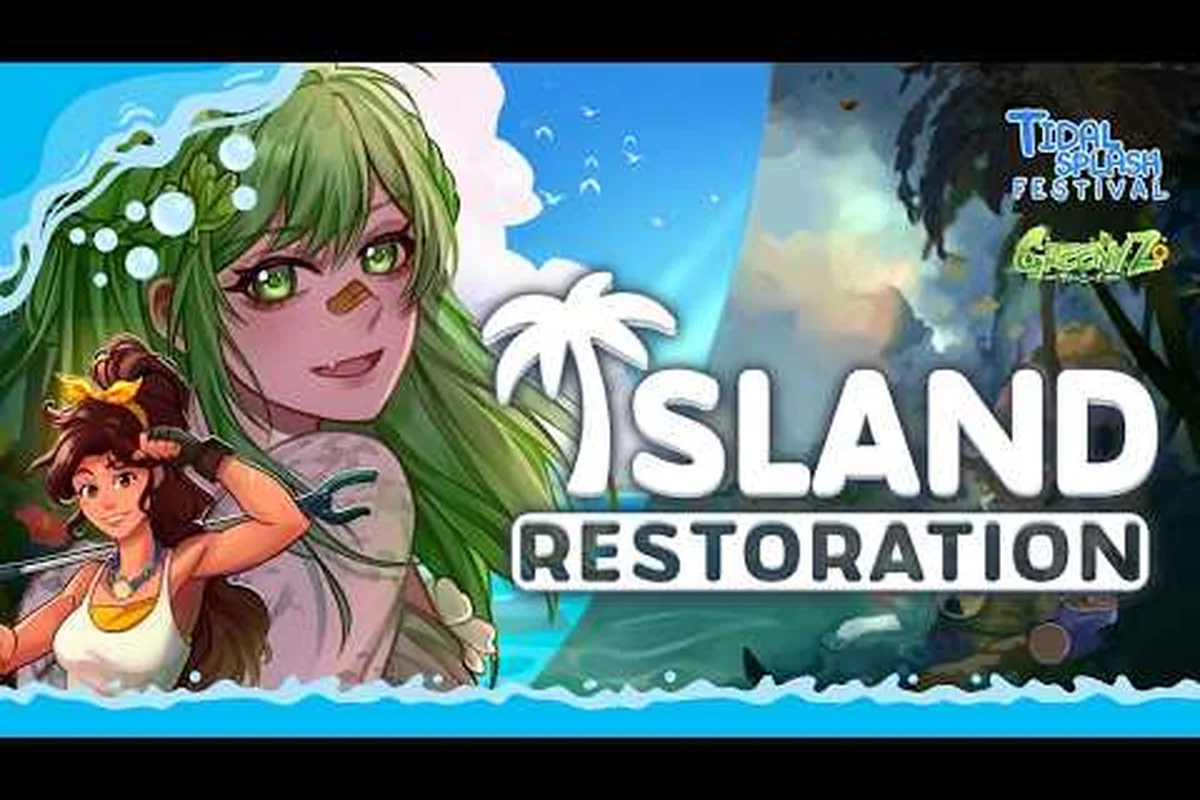
Few cozy cleaning sims promise a fresh map every time you sail, and that is exactly the pitch behind the island restoration new island each time design philosophy. According to the official Steam page, the full release offers 4 unique biomes spread over 12 distinct maps, a built-in randomizer, and infinite side contracts that keep the cleanup loop replayable well past the credits. The randomizer reshuffles the way trash, oil, vines, and mud spawn on each island, so two players sailing the same Tropical Isles layout can still end up cleaning very different shorelines.
The island restoration map generation system drives every session through a seeded procedural layer that rebuilds trash, oil, vine, and mud spawns before each contract loads, and this guide explains how that randomizer layer interacts with the 4 biomes and 12 fixed maps rather than replacing them outright. You will see how fixed geography, such as Tropical Isles versus Volcanic Reach, anchors the navigation, while the shuffled overlay keeps restoration loops feeling distinct, so two saves never play the same shoreline twice and contracts like beach sweeps or reef scrubs stay useful across dozens of resets.
How Procedural Map Generation Works in Island Restoration
Procedural generation in Island Restoration is not a single switch but a layered system. The 12 hand-authored maps act as the canvas, and the randomizer paints pollution, animals, and contract targets onto that canvas with rules tuned to each biome. The result is that the bones of an island — its size, coastline shape, and biome identity — feel familiar across runs, while the cleanup work itself feels new every session.
According to the official release announcement from EliteTheDev, the randomizer was a deliberate answer to player feedback collected during the May 18 demo window. Players wanted endless replayability without sacrificing the cozy, hand-crafted feel of the Tropical Isles. The solution was to keep the maps authored by hand and randomize the layer on top.
Fixed Map Bones vs Randomized Surface Layer
The split between fixed and randomized content is the key to understanding why no two runs ever feel identical. The bones stay the same so navigation, waypoints, and the general loop stay readable. The surface layer rotates so the actual cleaning work changes.
| Layer | Randomized? | What It Controls |
|---|---|---|
| Island silhouette and biome | No (fixed) | Coastline shape, palm vs. pine vs. coral look, ambient palette |
| Pollution spawn points | Yes (per session) | Where oil slicks, trash piles, vines, and mud clusters appear |
| Animal spawn locations | Yes (per session) | Where crabs, turtles, and birds hide on each map |
| Contract target islands | Yes (per rotation) | Which polluted shoreline the job board sends you to next |
| Skill tree and tools | No (persistent) | Your permanent upgrade progression across runs |
| Boat cosmetics | No (persistent) | Your saved boat loadout and unlocked parts |
What the Randomizer Actually Reshuffles
Players who tested the demo during the 4,000 wishlist overhaul reported that the randomizer respects biome-specific pollution rules. Tropical Isles never get frozen mud that belongs to a Tundra map, and Coral Coves do not suddenly sprout industrial oil slicks reserved for the Industrial Shallows. The randomization swaps density, position, and clustering of messes while keeping the biome's visual language intact.
That design choice is what lets the full release feel like 12 hand-crafted maps and an effectively infinite set of cleanup scenarios stacked on top of them. If you want a deeper breakdown of how the four biomes differ, the Island Restoration biome guide maps every region in detail.
Island Restoration Island Randomizer Settings and Rules
The randomizer is not a hidden developer toggle. According to the official Steam news post, it is a built-in feature that ships enabled by default. There is no separate mode to unlock, no extra purchase, and no opt-in menu buried in the pause screen. The moment you finish restoring an island and accept a new contract, the next shoreline you visit has already been reshuffled.
Veteran restorers learn to read the randomizer's pattern logic in just a few contracts, because the built-in feature respects the same biome weighting, shoreline length, and debris density rules on every procedural island it generates — meaning the variety comes from layout, not from breaking its own rules. Experienced players use that predictability to plan salvage routes, pre-stage booms and winches, and recognize which contract tile shapes signal a small, harbor-style island versus a sprawling archipelago chain before they even accept the job.
Three Randomization Rules You Can Count On
-
Biome purity is preserved. Pollution that belongs to a biome stays in that biome. A Snowdrift Pines island will never spawn jungle vines, and an Industrial Shallows map will never hand you a turtle rescue in a coral lagoon.
-
Animal spawns scale with restoration progress. Early in a biome, the randomizer leans on common species like crabs and gulls. After the skill tree unlocks biome-specific upgrades, rarer animals like the Sea Turtle and Axolotl start appearing in randomized clusters.
-
Contract difficulty tracks map size. According to community testing reported during the demo, larger maps tend to roll contracts with more pollution density, which means bigger payouts but longer sailing windows between tool refills.
Randomizer Behavior by Biome
| Biome | Pollution Variety | Animal Variety | Typical Contract Length |
|---|---|---|---|
| Tropical Isles | Low–medium (oil, trash, light vines) | Crabs, gulls, turtles | Short (3–6 minutes) |
| Coral Coves | Medium (kelp vines, plastic clusters) | Tropical fish, sea turtles | Medium (5–9 minutes) |
| Snowdrift Pines | Medium–high (frost mud, ice trash) | Foxes, otters, snowy owls | Medium (6–10 minutes) |
| Industrial Shallows | High (heavy oil, metal scrap, thick vines) | Hardy seabirds, otters | Long (8–14 minutes) |
If you want to know which maps count as the biggest and smallest in each biome, the Island Restoration big islands guide ranks them by sail distance and pollution load — cross-referencing it with the table above is the fastest way to predict whether your next procedural island will skew toward a short Tropical Isles run (~3-6 minutes, low oil and trash density) or a long Industrial Shallows contract (8-14 minutes, thick vines and metal scrap), since the randomizer pulls from the same biome pool every time the map generates.
Why No Two Runs Feel the Same Twice
The promise of a new island each time is more than a marketing line. The procedural layer touches three systems at once: pollution placement, animal rescue targets, and contract generation. When all three rotate in the same session, even a map you have cleaned 20 times feels like a new puzzle.
According to the Island Restoration Steam store page, players can look forward to restoring a brand-new island each time they progress, keeping the gameplay loop fresh and varied with every restoration cycle.
The Three Layers That Rotate Together
-
Pollution layer. Oil slicks, trash clusters, vine coverage, and mud patches are scattered using biome-appropriate rules. A Tropical Isles run that gave you three oil slicks and a vine patch last time might hand you five oil slicks, two vine patches, and a hidden trash pile under the palm canopy next time.
-
Animal layer. Wildlife spawns are randomized inside each biome's known hotspots. Two players can both rescue turtles on the same map, but the specific cove where the turtle appears will differ.
-
Contract layer. The job board pulls targets from a pool of un-restored islands. Because the pollution layer shifted, the contract description reads differently even if the destination biome is the same.
Reading a Fresh Island Quickly
Because the island randomizer reassigns terrain, pollution clusters, and contract objectives every time you load in, even veteran restorers can't memorize a route — the first ten seconds after docking are a deliberate reset, where the procedural map forces you to read the new shoreline instead of running a cached path. Treat each fresh island as an unknown biome variant: scan the high-tide line for oil sheen, glance at the rock formations where turtles surface, and check the contract board for the priority pollution type before you ever pick up a tool. This habit is what makes "never the same island twice" feel like replayable depth rather than randomness for its own sake, and it's exactly the loop the Island Restoration new player guide breaks down hour-by-hour.
-
Scan the high-tide line first. Oil slicks ride in on the tide, so they almost always land along the beach edges.
-
Look for animal distress cues before grabbing tools. Crabs hide under flipped debris, and turtles surface near the same rock formations regardless of where the randomizer placed the trash.
-
Check the contract objective marker. The job board tells you which pollution type is the priority, so you can rotate to the right tool instead of guessing.
-
Plan a wide loop, not a zigzag. With pollution scattered randomly, a single coastal sweep catches more than a back-and-forth grid.
If you want a full day-one routine for using these reads in order, the Island Restoration new player guide walks through the first hour of every biome — and crucially, it shows how the island randomizer rerolls pollution density, contract tier, and animal spawn tables on every load, so the guide is built around teaching the scan sequence (high-tide sheen → rock formation fauna → contract marker) rather than memorizing a single map layout. Expect roughly 8–12 pollution clusters and 3 contract objectives per freshly generated island, which is why the hour-by-hour walkthrough repeats the loop across mangrove, reef, and atoll biomes instead of optimizing one route.
How Procedural Islands Connect to the Skill Tree and Tools
Procedural generation does not just shuffle pollution — it also changes the value of every upgrade node in the skill tree. When the randomizer drops a heavy vine patch in a biome you do not usually see one in, your Power Washer upgrade matters more than the Grabber upgrade you would normally prioritize for trash-heavy runs.
Skill Tree Picks That Scale With Procedural Variety
| Skill Node | Why It Matters With Procedural Maps | Best Run Type |
|---|---|---|
| Water Tank Capacity | Longer runs between refills on high-density pollution rolls | Industrial Shallows |
| Power Washer Pressure | Strips randomized vine clusters faster | Snowdrift Pines, Coral Coves |
| Grabber Reach | Picks up scattered trash without sprinting between piles | Tropical Isles |
| Soap Efficiency | Cleans oil slicks that the randomizer clusters on beaches | Any biome with oil |
| Animal Soothe Aura | Calms randomized wildlife spawns in unfamiliar hotspots | Coral Coves |
| Sail Speed | Shortens the time between randomized contract targets | All biomes |
Tool Rotation Tips for Randomized Cleanup
Each randomized island reshuffles tool priorities in ways that fixed maps never demand, so the demo overhaul's community data points to three rotation habits that survive the procedural island variety. Because the randomizer reseeds shoreline debris, vine clusters, and buried mud independently, players who lock into a single tool order lose time; muscle memory has to flex between a Soap-first shoreline pass, a Grabber-to-Shovel handoff for inland debris, and a reserved Cutters finisher for stacked vine mats. The three habits below were the most consistent across the cleaned-up randomized runs.
-
Open with Soap on oil, then Power Washer on vines. Oil almost always lands on the wet sand, so Soap clears the shoreline first, and the Power Washer follows up on whatever vine clusters the randomizer dropped inland.
-
Switch to Grabber for trash, then Shovel for mud. The Grabber pulls scattered debris without the long animation of the Shovel, but the Shovel wins on the thick mud patches the randomizer sometimes buries under vegetation.
-
Save Cutters for stubborn overgrowth. Cutters handle thick vine mats that survive a Power Washer pass, which matters more when the randomizer stacks multiple vine patches in a row.
For a full walkthrough of the cleaning order from shoreline to inland — including how the island randomizer reseeds debris layouts on every new island — the Island Restoration how to clean islands guide breaks down the Soap, Power Washer, Grabber, Shovel, and Cutters rotations in sequence, with screenshots of the procedural spawn patterns that determine which tool lands first in the queue.
Infinite Side Contracts and the Procedural Map Pipeline
The procedural island system is not just about the islands themselves — it also feeds the infinite side contracts that the job board generates. Every time you finish a contract, the game pulls a new target island, applies a fresh procedural pollution pass, and writes a new contract description. That is how the contract pool stays endless even with only 12 base maps.
According to the release date announcement, this design was the answer to a common question during the demo: what happens after you clean all 12 maps? The answer is that the 12 maps keep rotating with new pollution layouts, and the contracts keep rewriting themselves, so the cleanup loop never runs dry.
How the Contract Pipeline Stays Infinite
| Step | What Happens | Player-Visible Result |
|---|---|---|
| 1 | A contract slot opens on the job board | A new icon appears on the board |
| 2 | The randomizer picks an un-restored island target | A biome and a map name appear in the contract text |
| 3 | The procedural layer lays out pollution for that map | The destination shoreline looks different from last time |
| 4 | The contract writes its reward tier and difficulty | A payout number and timer appear |
| 5 | You sail to the island and clean it | The cycle resets with a new target ready |
This loop is what makes infinite side contracts feel truly infinite. Even after 50 runs on the same Tropical Isles map, the pollution pattern, animal spawns, and contract flavor text still feel new. The procedural layer treats the 12 maps as a reusable stage rather than a finite checklist.
Practical Tips for Restoring Islands Without Burning Out
A new island every time is a gift, but it can also become overwhelming if you do not pace yourself. Community testing during the demo overhaul surfaced a few habits that keep the procedural loop feeling cozy instead of grindy.
Pacing the Procedural Loop
-
Set a session budget. Two to four islands per sitting is the sweet spot most players reported during the demo. Randomization rewards short, focused runs more than marathon sessions because the pollution pattern stays readable.
-
Rotate biomes every session. If you only ever clean Tropical Isles, the procedural layer starts to feel similar even with randomization. Sailing into Snowdrift Pines or Industrial Shallows resets your mental map and keeps every cleanup run feeling fresh.
-
Lean on contracts as a guide. Instead of picking a random island, let the job board send you somewhere. The contract description is written around the randomized pollution layer, so the objectives always match the mess you are about to clean.
-
Upgrade before you grind. If you sail into a heavy Industrial Shallows run without upgraded water capacity, the randomized pollution density will drain your tank fast. Spend skill points before chasing high-tier contracts.
-
Keep boat cosmetics as a reward. Since boat parts are persistent and not randomized, you can use cosmetic unlocks as a mental checkpoint between procedural runs.
Where Procedural Generation Stops and Hand-Crafted Design Begins
It is worth being honest about the limits of the system. Procedural generation in Island Restoration is layered on top of hand-authored maps, not a true roguelike generator that builds islands from scratch. That means the silhouette, biome palette, and general layout of any given map will always look the same, but the pollution, animals, and contract details rotate.
Players who expect fully unique islands every run may find that the 12 base maps feel like a ceiling. Players who enjoy cozy cleaning and want a familiar map with a fresh cleanup puzzle will find the system hits the sweet spot. According to the official release notes, the developer chose this balance intentionally so that wayfinding and biome identity stay readable across hundreds of hours.
The takeaway is that the randomizer does not replace the 12 hand-authored maps — it multiplies them by stacking a procedural contract layer on top. Each base map becomes a stage, and every sailing session rerolls pollution placement, animal distribution, and contract objectives, so the core island never repeats twice even though its silhouette, biome palette, and landmark anchors stay locked.
Frequently Asked Questions
Does Island Restoration really generate a new island every time?
No single island is generated from scratch, but the built-in randomizer reshuffles the pollution, animal, and contract layers on each of the 12 hand-authored maps every session. The result is a familiar map silhouette with a freshly randomized cleanup layout, which is how the game keeps the loop feeling new without sacrificing the cozy, hand-crafted Tropical Isles aesthetic.
How does the island randomizer decide what to spawn?
The randomizer follows biome-specific rules so that a Tropical Isles run never gets a frozen mud patch and a Snowdrift Pines run never gets tropical vines. It rolls pollution density, animal spawn clusters, and contract target placement using weighted pools tuned per biome, which is why each run feels different but still biome-appropriate.
Will I ever see the exact same island twice?
The 12 base maps are fixed, so the silhouette repeats. The pollution, animal, and contract layers almost never repeat in the exact same configuration, so two consecutive runs on the same map will usually feel distinct. The full release pushes this further with infinite side contracts that rewrite the job board using the randomized islands as targets, which is why infinite contracts and procedural maps feel like the same system.
Does the randomizer affect achievements?
Yes. According to the official Steam page, the full release ships with Steam Achievements, and several of them are tied to randomized conditions like rescuing rare animals in specific biomes or completing high-density procedural contracts. Tool-swap and randomizer conditions are tracked through the achievement system, so a fresh procedural roll can sometimes be the fastest way to pop a rare trophy.
Is the randomizer optional, or is it always on?
The randomizer is built-in and on by default in the full release. There is no separate mode to toggle, which keeps the experience friction-free. The developer designed it this way so that players never have to choose between the curated 12-map tour and endless replayability — both ship in the same package from the first sail on September 23, 2026.