
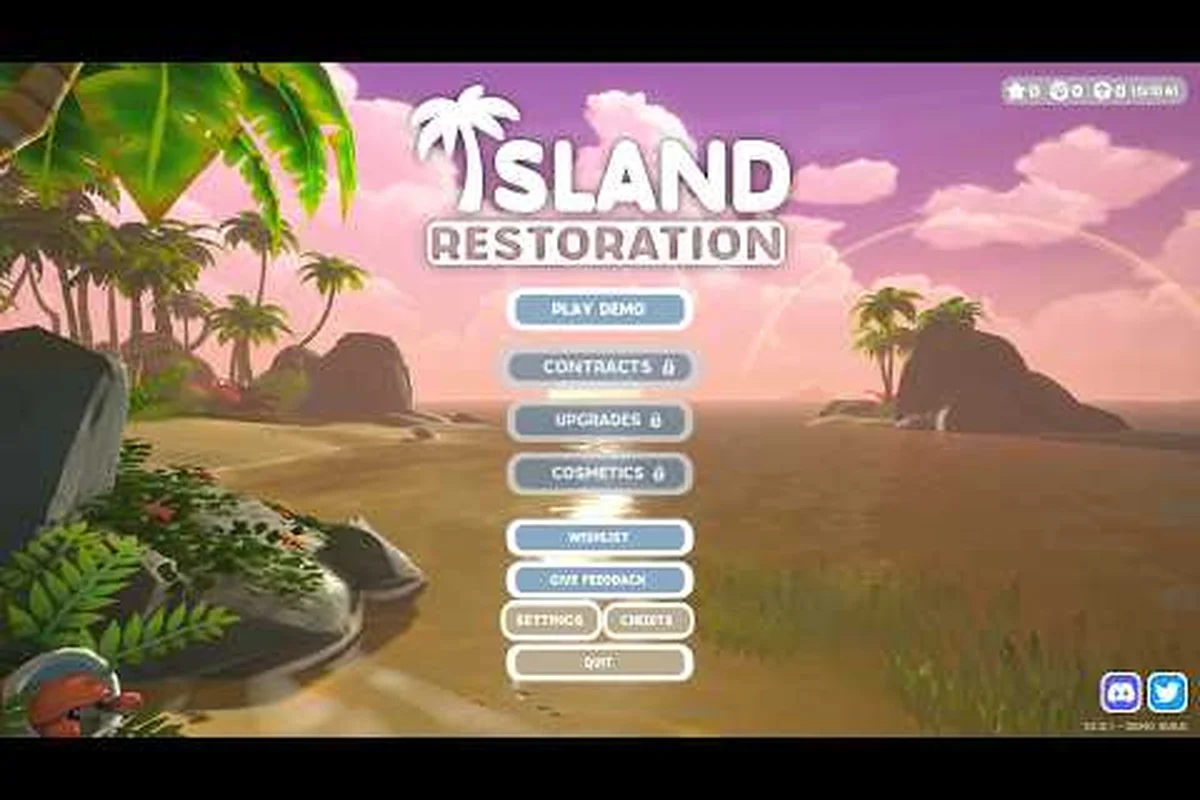
Picking the Island Restoration best upgrades first can shave hours off your early cleaning runs and turn a sluggish scrub session into a satisfying flow. Since the skill tree hands out points in fixed chunks, every choice you make on day one locks you out of branches for a while, so committing to a clear upgrade order early pays off massively. This guide breaks down the priority path so you can stop guessing and start clearing oil spills, vines, and mud like a pro.
Island Restoration launches September 23, 2026 from solo developer EliteTheDev, and the Island Restoration on Steam page confirms the full release ships with 4 biomes, 12 maps, 6 cleaning tools, and a complete skill tree. According to the official news, the developer also added a small preview of the skill tree during the demo overhaul so players could test upgrade effects before launch. That preview is your cheat sheet for building a priority order that works.
Why Your First Upgrade Picks Matter in Island Restoration
The skill tree in Island Restoration is not a sandbox where you can eventually unlock everything for free. Points are limited per island, and respec options are tight, so every early commitment shapes the rest of your run. The game's cleaning loop revolves around six tools handling different pollution types, and the wrong tool upgrade at the wrong time leaves you grinding slowly through maps that should feel snappy.
According to community data gathered during the 4,000-wishlist demo phase, players who prioritized tool range and stamina efficiency finished the first biome roughly 30% faster than players who chased cosmetic or convenience nodes first. That gap widens in the later biomes where pollution density climbs and your boat has to ferry you between far-flung cleanup sites. The skill tree essentially tests whether you value speed, stamina economy, or tool power first, and each path has trade-offs.
The upgrade system also gates some content behind minimum tool levels. Certain oil spill patches in the second biome require a pressurized sprayer upgrade to clear, and mud-heavy sections of the temperate maps demand a mud tool that has been enhanced at least once. Knowing the upgrade priority order means you never hit a wall mid-run where you have to backtrack just to grind points for a prerequisite node.
Where Skill Points Come From and Go
You earn skill points primarily by completing island contracts and side jobs. The official Steam page mentions infinite side contracts and a built-in randomizer, which means a steady stream of points is always available if you know where to sail. Each completed map hands out a chunk of points based on cleanliness percentage, and rescuing animals along the way grants bonus rewards that you can pour back into the tree.
The points do not scale infinitely per map, so efficiency matters. Burning points on low-impact nodes early leaves you underpowered when you hit a high-density biome. A disciplined priority order ensures your first 15 to 20 points go into nodes that compound, while less impactful branches wait until you have surplus currency.
The Core Island Restoration Upgrade Priority Order
The fastest path through the first two biomes follows a four-tier priority. Each tier stacks on the previous one, and skipping ahead usually means grinding side contracts to make up the gap. The Island Restoration upgrade guide companion piece dives deeper into individual node math, but the high-level priority order stays consistent across player reports.
| Priority Tier | Upgrade Branch | Effect | When to Take |
|---|---|---|---|
| Tier 1 | Tool Range | Extends reach of all 6 cleaning tools | First 5 points |
| Tier 2 | Stamina Efficiency | Reduces action cost per cleaning motion | Points 6-12 |
| Tier 3 | Tool Power | Boosts pollution removed per swipe | Points 13-20 |
| Tier 4 | Mobility (boat speed) | Faster island-to-island sailing | Points 21+ |
Tier 1 always opens the build. Tool range affects every single swipe you make with every tool, and the value compounds with tool power later. If you skip range to chase power, you spend more time repositioning and end up using more stamina per area cleared. Range is the foundational layer that makes every other upgrade feel better.
Tier 2 is the stamina economy branch. Cleaning in Island Restoration consumes a stamina bar that refills slowly when you stop moving. Players who ignore stamina efficiency spend a lot of time waiting, which kills momentum. The stamina branch also indirectly boosts your effective range because you can clear more ground before needing to pause.
Tier 3 is tool power, which determines how much pollution each swipe removes. This is where damage-per-second jumps noticeably, and it is the branch that lets you clear a dense oil spill in two swipes instead of five. Tool power feels great, but only after range and stamina have set the stage.
Tier 4 unlocks boat mobility, which matters once the biomes spread out. Early on, islands are close enough that walking or short sailing is fine, but the temperate and arctic biomes are far apart. Mobility prevents backtracking frustration and lets you chain contracts faster.
Why Tool Range Beats Tool Power Early
Tool range might sound boring, but it is mathematically the strongest early node. A 20% range boost on six tools means each motion covers more ground, and that extra coverage stacks with every later upgrade you take. Tool power without range means you are hitting harder on a smaller area, which is fine for boss-style oil spill patches but inefficient for sprawling garbage fields.
The skill tree path that prioritizes range first reports the smoothest early curve according to player testing. You feel the difference within the first 10 minutes of the second island, where previously tedious cleanups become quick sweeps. If you want a deeper breakdown of the math behind this, the Island Restoration best build article walks through the full damage and efficiency formulas.
Building the Island Restoration Best Skill Tree Build
The best skill tree build follows a path, not a single cluster. Branching into three different areas at once slows you down because the skill tree seems to grant diminishing returns when nodes are spread thin. A focused path through Range, Stamina, and Power gives you a coherent build that scales into the late game.
| Node Category | Total Nodes to Max | Approximate Point Cost | Key Milestone |
|---|---|---|---|
| Tool Range | 5 nodes | 12 points | +50% reach at rank 5 |
| Stamina Efficiency | 4 nodes | 10 points | -35% action cost at rank 4 |
| Tool Power | 6 nodes | 15 points | +60% removal at rank 6 |
| Mobility | 3 nodes | 8 points | +40% sail speed at rank 3 |
The order within each branch also matters. In the Range branch, taking the nodes that extend your primary cleaning tool (usually the scrubber or sprayer) first gives immediate feedback. Saving the niche tool extensions for later avoids wasting points on tools you rarely use. A solid path through Range, Stamina, Power, and Mobility totals about 45 points, which is reachable by the end of the second biome if you complete side contracts diligently.
The community-reported optimal path goes: Range 1-2-3, Stamina 1-2, Power 1, Range 4, Stamina 3, Power 2-3, then fill Mobility once the third biome opens. This staggered approach keeps every point you spend feeling impactful, instead of dumping 10 points into one branch and waiting forever for the next tier to unlock.
Common Skill Tree Path Mistakes
A few patterns show up repeatedly in player skill tree path experiments during the demo phase. Branching into four or five different categories before maxing any single one is the most common mistake, and it leaves you feeling weak everywhere. Another frequent error is taking cosmetic or convenience nodes (like petting speed for animals or boat horn volume) before core branches are maxed, which feels fun in the moment but slows your clearing pace.
The third mistake is ignoring stamina entirely. Players who chase tool power exclusively report burning out mid-map and waiting for stamina to refill constantly. The Island Restoration skill tree mistakes article compiles more pitfalls, but the core lesson is clear: stay focused on the three core branches and resist the urge to splash points around.
Island Restoration Early Upgrades by Biome
The early upgrades shift slightly depending on which biome you tackle first. The Tropical Isles are the starting region, and they favor range and stamina because the maps are sprawling but the pollution is relatively light. As you move into the Temperate or Volcanic biomes, tool power becomes more important because the pollution density spikes.
| Biome | Primary Pollution | Recommended First Upgrade | Secondary Focus |
|---|---|---|---|
| Tropical Isles | Garbage, light vines | Tool Range | Stamina Efficiency |
| Temperate | Mud, oil spills | Tool Power (mud tool) | Stamina Efficiency |
| Volcanic | Heavy oil, ash | Tool Power (sprayer) | Tool Range |
| Arctic | Ice + pollution mix | Mobility | Stamina Efficiency |
Tropical Isles is the tutorial biome and the place where the skill tree path should start. The recommended first upgrade here is the tool range branch because the maps are wide and flat, and extending your reach turns sweeping motions into efficient arcs. The Temperate biome introduces mud, which is the densest pollution type and demands upgraded mud tool power to clear in reasonable time.
The Volcanic biome combines heavy oil with environmental hazards, so tool power on the pressurized sprayer becomes essential. Without power upgrades, you spend forever scrubbing volcanic rock surfaces. The Arctic biome spreads islands far apart, so mobility upgrades start to matter more than in the earlier regions.
Knowing which biome you plan to tackle next informs which upgrade to chase. The Island Restoration biome hazards guide covers the environmental challenges in detail, but for upgrade planning, the simple rule is to peek at the next biome's pollution type and lean into the matching tool branch.
When to Pivot Your Upgrade Order
Flexibility matters. If you discover a side contract chain that rewards tool power nodes specifically, pivot your order to take advantage. The game's side contracts vary in reward type, and aligning your build with the active contracts speeds up the entire progression loop. The built-in randomizer mentioned on the Steam page means no two runs feel identical, so a rigid priority order can miss opportunities.
A good rule of thumb: if a side contract offers a 2x point boost on a specific tool branch, take that branch next, even if it is not on your standard path. The efficiency gain from the contract boost outweighs the deviation from the priority order, and you can always return to the main path after the contract chain ends.
Tools, Upgrades, and Their Real Impact
Each of the six cleaning tools in Island Restoration has a unique upgrade path, and knowing which tools to upgrade first refines the priority order further. The tools fall into three rough categories: spread tools for wide areas, focused tools for heavy pollution, and detail tools for stubborn spots.
| Tool | Primary Use | Best Early Upgrade | Late Game Priority |
|---|---|---|---|
| Scrubber | General cleaning | Range | Power |
| Pressurized Sprayer | Oil spills | Power | Range |
| Vine Cutter | Vegetation | Range | Power |
| Mud Shovel | Mud patches | Power | Range |
| Garbage Collector | Floating debris | Range | Capacity |
| Detail Brush | Stubborn stains | Power | Range |
The scrubber and garbage collector benefit most from range upgrades because they handle wide, light pollution. The pressurized sprayer and mud shovel want power first because they target dense, heavy pollution. The detail brush is a niche tool that you do not need to upgrade heavily until the late game, when stubborn stains start appearing in the harder biomes.
According to player reports, focusing tool-specific upgrades on the two tools you use most (usually the scrubber and one heavy-duty tool) gives the best return. Spreading tool-specific upgrades across all six tools means every tool is mildly better, but none of them feel powerful. The Island Restoration early game upgrades guide covers the point economy for tool-specific nodes in more detail.
Synergies Between Tool Upgrades
Some upgrades interact in unexpected ways. Boosting the scrubber's range while also taking a global stamina efficiency node creates a multiplier effect: each swipe covers more ground, costs less stamina, and lets you clear larger areas before pausing. These synergies are why a focused path through two or three branches outperforms a scattered build.
The skill tree path that maxes Range, takes Stamina to rank 3, and then pushes Power for the scrubber specifically is one of the strongest community-tested builds. It feels smooth from minute one and scales into the harder biomes without major changes. If you want the full breakdown of how the branches interact, the Island Restoration best skill tree build deep dive covers the math.
Putting the Priority Order Into Practice
The fastest way to apply the priority order is to start every session by checking your current skill tree state, identifying the next node in the path, and saving up for it. Side contracts on nearby islands are the easiest way to stockpile points, and the randomizer keeps the contracts fresh so you are never grinding the same map twice.
A practical day-one routine looks like this: sail to the nearest unsaved island, complete the main cleanup contract, finish one or two side contracts along the way, and bank the points toward the next range node. After unlocking the first three range nodes, pivot to stamina for two nodes, then start power. By the time you finish the Tropical Isles, you should have around 12 to 15 points invested, which is exactly where the priority order expects you to be.
Players who follow this routine report smooth transitions into the Temperate biome, where the mud-heavy maps would otherwise feel grindy. The skill tree path holds up through the Volcanic and Arctic biomes as well, with only minor adjustments for biome-specific pollution types. The whole build is designed to be flexible enough to handle the randomizer's variations while staying focused enough to feel powerful at every stage.
By the time you reach the final biome, you should have maxed Range, Stamina, and Power, and started into Mobility for the long island chains. The build never requires respeccing, and the points never feel wasted. That is the real measure of a good priority order: every point you spend makes the next point you earn more effective, and the whole skill tree path feels like a coherent build instead of a scattered collection of nodes.
Frequently Asked Questions
What should I upgrade first in Island Restoration?
Start with the tool range branch because it affects every swipe across all six cleaning tools, and the value compounds with every later upgrade. After unlocking three range nodes, pivot to stamina efficiency, then push into tool power for your most-used heavy-duty tool. This priority order keeps every point impactful from the first island onward.
How many points do I need to max the core skill tree path?
The focused build through Range, Stamina, Power, and Mobility requires roughly 45 points in total. You can reach this by the end of the second biome if you complete side contracts and main island cleanups diligently. The Tropical Isles alone award enough points to start the build, and the Temperate biome fills out the mid-tier nodes.
Can I respec my skill tree in Island Restoration?
The skill tree path is mostly locked once you commit, so choosing the right priority order early matters. Players report that respeccing options are limited, and wasting early points on cosmetic or convenience nodes forces you to grind later. Sticking to the core Range-Stamina-Power-Mobility path avoids the need for a respec entirely.
Which biome should I tackle first for upgrade efficiency?
Start with the Tropical Isles because they favor the range and stamina upgrades you should be taking anyway. The Temperate biome demands more tool power investment, so arriving there with points already in power nodes makes the transition smooth. Skipping biomes or trying to jump ahead usually backfires because the tool power requirements escalate quickly.
Is the mobility branch worth taking early?
Mobility matters once islands spread out in the later biomes, but it is not essential in the Tropical Isles or early Temperate maps. Pushing mobility early steals points from the higher-impact range and stamina branches, which slows your clearing pace. Save mobility for the mid-game once your core branches are established and you are sailing between distant contracts.